
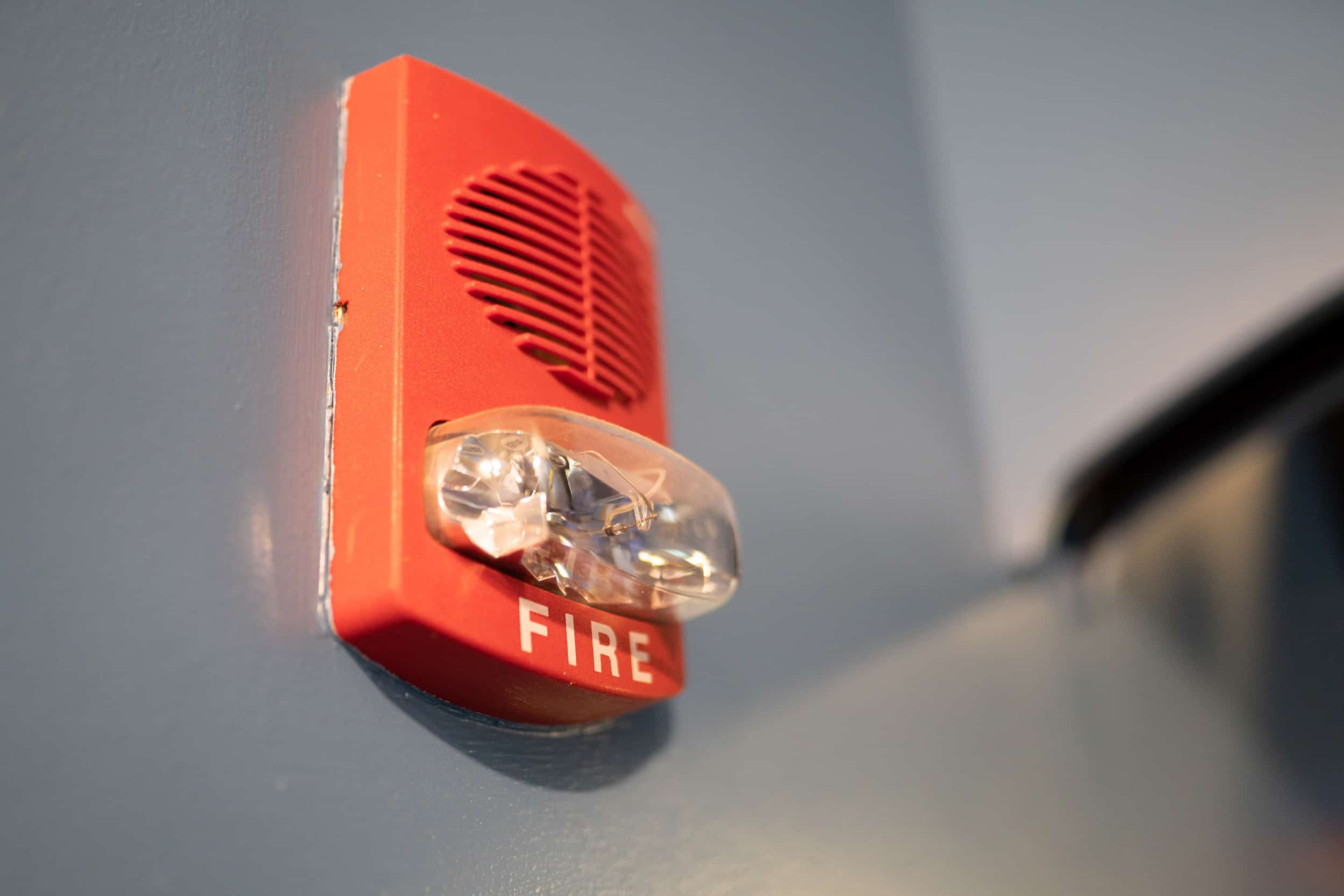
NFPA 72 specifies visible notification requirements in Chapter 18, which determine strobe intensity based on the room size and the location of the strobe(s). The Code provides separate tables for wall-mount and ceiling-mount strobes. However, the tables are all based on square rooms. Since most buildings do not have perfectly square rooms throughout, let alone rooms that meet the exact dimensions listed in the table, the Code provides provisions for adjusting the spacing based on the characteristics of the room.
Non-Square Rooms
The tables in NFPA 72 covering strobe intensity requirements are based on the square room. The table uses square room dimensions to ensure adequate delivery intensity to the farthest walls and corners of the room. However, since most rooms are not perfectly square and do not fall within the table’s dimensions, the Code allows the table to serve as a guide for strobe requirements in non-square rooms.
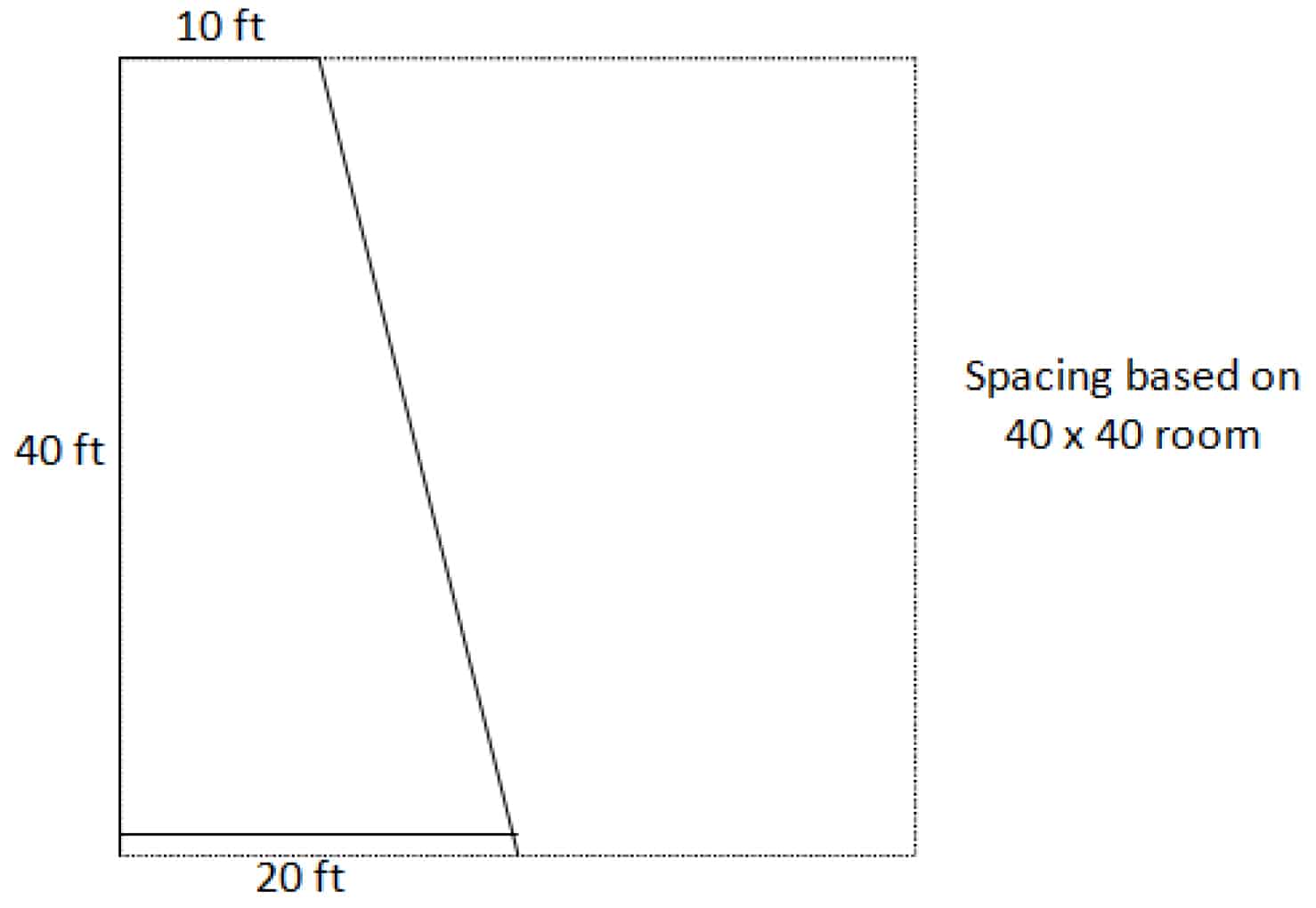 Non-square rooms use a square dimension from the table that encompasses the entire room to determine the required intensity. For example, the longest wall is used as the dimension for strobe calculation in rectangular rooms. For non-square, non-rectangular rooms, such as the trapezoid shown in the diagram below, a 40′ x 40′ square encompasses the entire room and serves as the basis for strobe candela selection.
Large Rooms
For large, non-square rooms, the Code allows the room to be divided into multiple squares for strobe coverage. Breaking these rooms into smaller squares for strobe coverage is an effective way to locate strobes and provide adequate coverage. It is especially effective in large rectangular rooms, where the room dimensions may exceed the tables’ dimensions. It is also very effective for large rooms with ceiling-mount strobes.
In the example below, a 100′ x 300′ is covered by twelve 95cd strobes. According to the table in NFPA 72, the coverage area of a 95cd strobe is 50′ x 50′ (wall or ceiling mounted). Therefore, the room can be divided into multiple 50′ x 50′ squares, each covered by a single 95cd strobe. Three 375cd strobes could also cover the room, but fire alarm strobe intensities above 185cd are not common.

Corridors
Corridors 20 feet wide or less may use special visible notification spacing rules per NFPA 72. The Code allows for standard room spacing or special corridor spacing rules in corridors 20 feet or less wide. If the corridor spacing rules are used, the Code permits the use of lower-intensity strobes than would be required under the room spacing rules.
NFPA 72 permits 15cd strobes to be used in corridors 20 feet wide or less. The strobes are required to be located within 15 feet of each end of the corridor, with no more than 100 feet between strobes in the corridor. Any changes in the elevation or direction of the corridor require treating each section as a separate corridor. Strobes required at the end of the corridor may be mounted on the ceiling, sidewall, or end wall. Corridors wider than 20 feet must be used in accordance with room spacing rules.

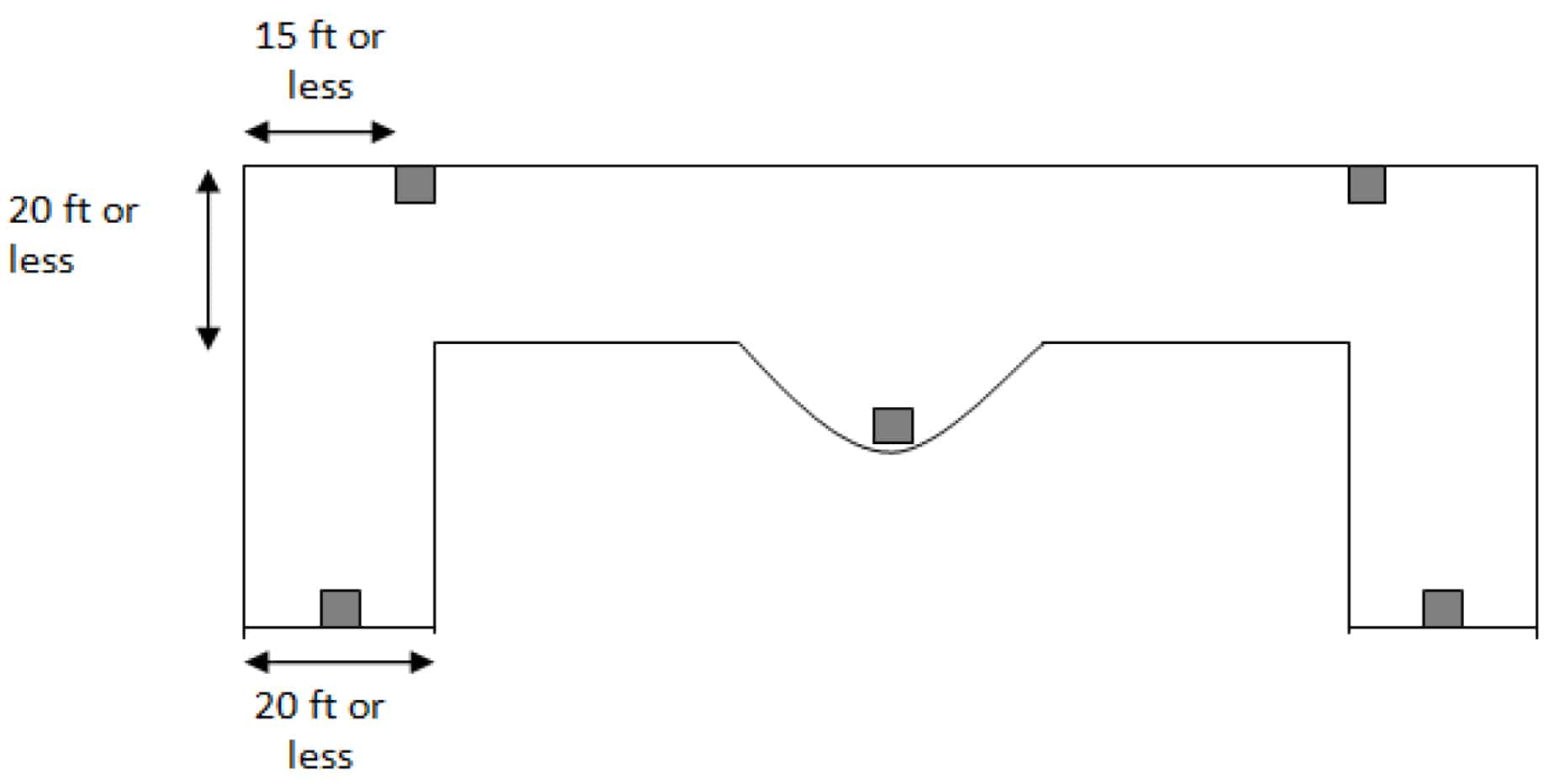
Visible notifications permit lower-intensity strobes in narrower corridors, since they are directly visible in the corridor. In-room spacing applications account for additional strobe intensity to allow for indirect notification of occupants. However, when the corridor spacing rules are applied, the occupants always have a direct line of sight to the strobe.
Sleeping Area Strobes
 The strobe’s intensity depends on the device’s mounting location. First, the strobe is required to be located within 16 feet of the pillow. A higher intensity is required if the strobe is mounted within 24 inches of the ceiling. For strobes mounted near the ceiling, a strobe rated at 177 cd is required. A lower-intensity strobe may be used if it is mounted closer to the pillow and is more than 24 inches from the ceiling. For strobes mounted near the pillow, a strobe rated at 110 cd is acceptable.
 For the strobes mounted in these sleeping rooms to be effective, they need to be located within 16 feet of the pillow, which is not an issue in most sleeping rooms due to their size. However, the fire alarm professional needs to ensure this requirement is met in larger rooms.
Where a visible notification is required in a sleeping area, it is also required to be provided during the activation of the in-room smoke alarm. NFPA 72 permits the use of combination smoke alarm/strobe systems to meet this requirement. However, since combination smoke alarms/strobes generally do not have a provision for externally activating the strobe, an external strobe connected to the building fire alarm is typically required.
