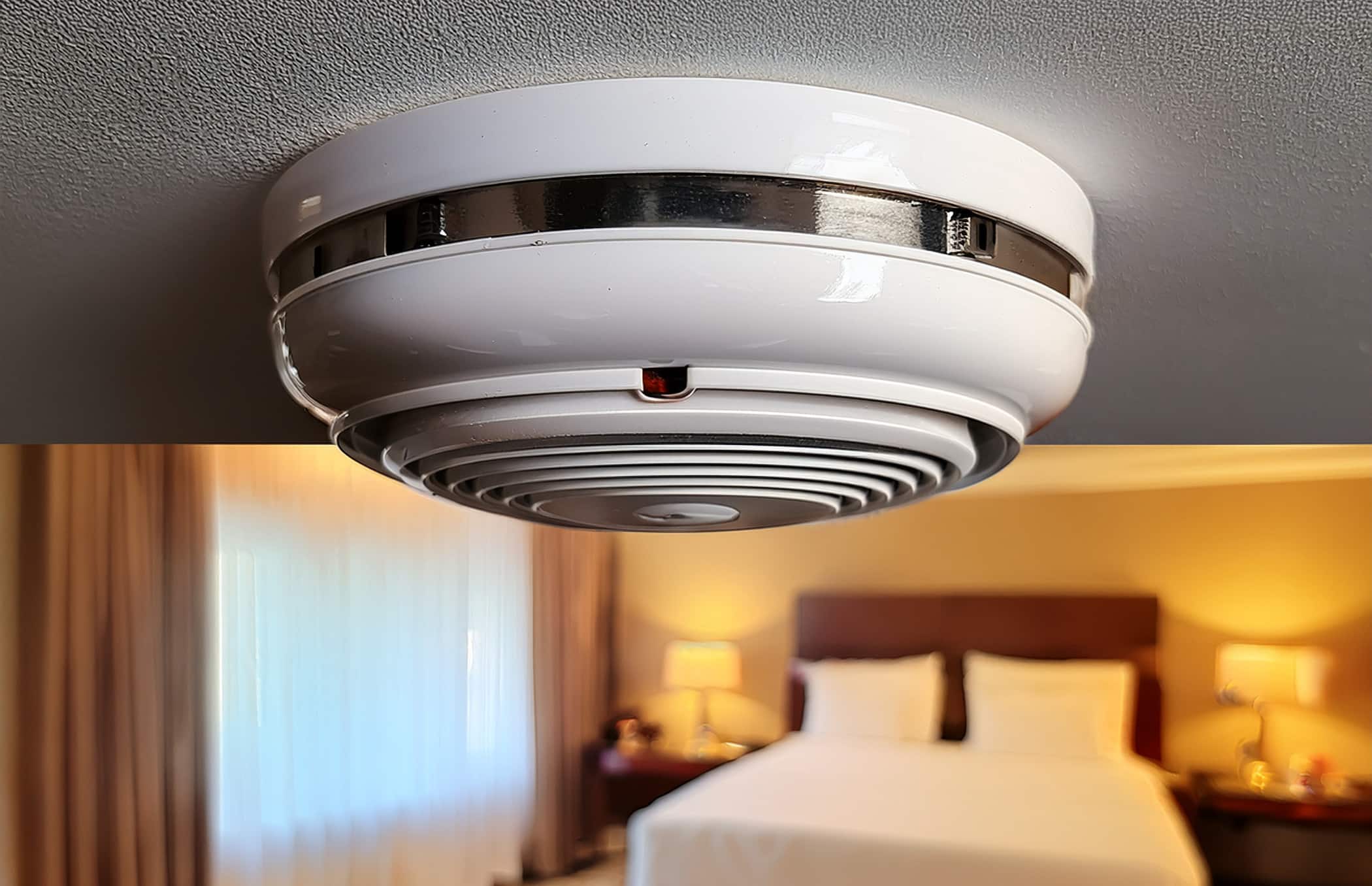
The IBC (International Building Code) and NFPA 101 (Life Safety Code) require smoke alarms in sleeping areas for specific occupancy classifications. Smoke alarms receive primary power from the building’s electrical wiring, typically at 120 VAC. Since most states consider 120 VAC to be high voltage, these detectors are typically supplied and installed as part of the high-voltage electrical work.
However, the IBC and NFPA 101 permit smoke alarms to be replaced by smoke detectors. When smoke detectors are used in place of smoke alarms, they are still required to provide smoke alarm-type functions, specifically in-room notification. The smoke alarm function is typically accomplished using addressable smoke detectors with sounder bases. The smoke detectors in this application function like a smoke alarm, sounding an alarm only in the sleeping unit rather than activating the building’s fire alarm. The smoke detectors in the sleeping units are not permitted to activate the building fire alarm.

This configuration has several advantages over using smoke alarms in multiple-sleeping-unit projects. The sounder base of the addressable smoke detector can be programmed to alarm locally only when the detector detects smoke, performing the smoke alarm function. The sounder base can also be programmed to sound when the building fire alarm is activated, since sleeping areas have more stringent notification requirements than common areas; a separate notification appliance connected to the fire alarm is typically required in sleeping areas. Finally, a sounder base allows a single device to perform the smoke alarm and the sleeping area notification function.
The IBC and NFPA 101 state that smoke detectors installed in sleeping areas instead of smoke alarms are permitted to annunciate on the fire alarm system, but are specifically prohibited from initiating an alarm signal. The IBC specifically requires that smoke detectors in sleeping units indicate a supervisory signal, while NFPA 101 only states they may not initiate an alarm signal.
This configuration has several advantages over using smoke alarms in multiple-sleeping-unit projects. The sounder base of the addressable smoke detector can be programmed to alarm locally only when the detector detects smoke, performing the smoke alarm function. The sounder base can also be programmed to sound when the building’s fire alarm is activated. Since sleeping areas have more stringent notification requirements than common areas, a separate notification appliance connected to the fire alarm system is typically required. A sounder base allows a single device to perform the smoke alarm and the sleeping area notification function.
Sleeping areas require a 520 Hz notification signal from the fire alarm system and smoke alarms in the sleeping units. Standard sleeping units may use in-room 520 Hz audible notification appliances to provide the required 520 Hz notification. Since hearing-impaired sleeping units also require visible notification, addressable smoke detectors with 520 Hz sounder bases are required.
The IBC also requires visible notification in I-1 (supervised residential housing) and R-1 (hotels) based on the total number of units in the building. Additionally, the IBC requires the ability to add visible notification in R-2 (apartments), as it may be required. In both instances, the IBC requires that the building fire alarm system and the in-room smoke alarm activate visible notification, either using separate strobes or a single strobe activated by both systems.
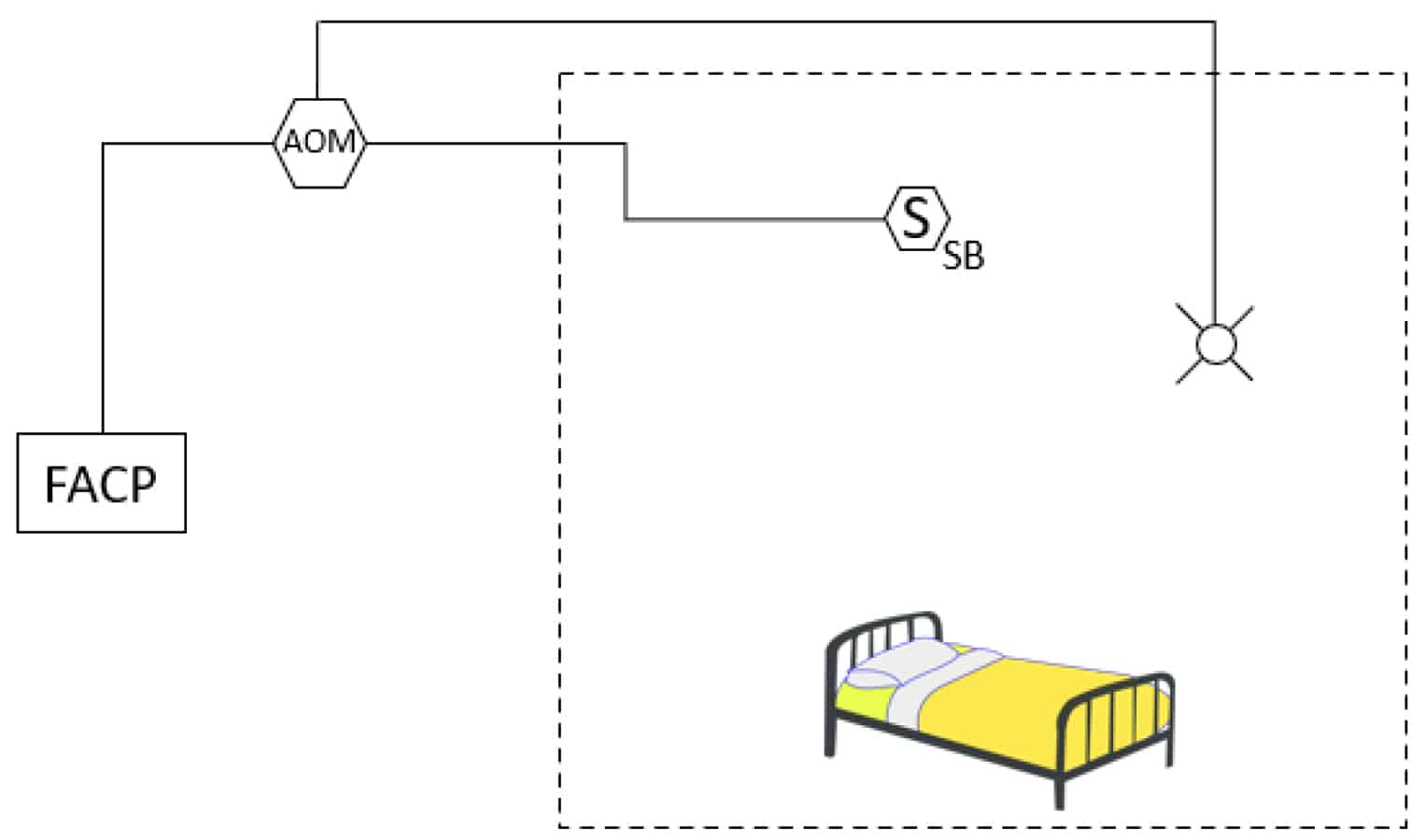
The visible notification requirement can also be accomplished using an addressable fire alarm system. An addressable smoke detector with a sounder base smoke alarm function, while an addressable notification module drives a visible notification appliance (strobe). The system is programmed to activate the strobe either by the in-room smoke detector (which serves as a smoke alarm) or by the building fire alarm system.